The U.S. Forest Service has proposed what is now the largest public land logging scheme of the century (and possibly history) in Colorado, “Pike’s Peak Vegetation Management,”194,567 acres of industrial logging—13,500 acres within four protected Roadless Areas—and 244,210 acres of toxic herbicide spraying in the Pike and San Isabel National Forests in El Paso, Teller, and Douglas Counties.
The federal land management agency appears to have been emboldened by a multi-year media blackout across all of Colorado on what, up to this point, were successively the three largest logging projects in state history, to propose a fourth, even larger and more destructive one with the public kept almost completely in the dark.
“The Forest Service is proposing a huge project that will likely have detrimental impacts on important resources, including four Roadless Areas and three wildlife species listed as threatened under the Endangered Species Act,” says Denver-based forest management consultant Rocky Smith, building on his more than forty years’ experience. “They provide only general information on which to respond to the proposal and give us only fourteen days to do so. This is not the way to manage the public’s forests.”
Currently, these “Big Four” logging schemes total almost half a million acres (474,872) of National Forests along the entire length of Colorado’s Front Range Rocky Mountains in seven counties, including 61,439 acres across seventeen Roadless Areas. All logging projects include clearcutting, as well as logging in endangered species habitat and old-growth forests.
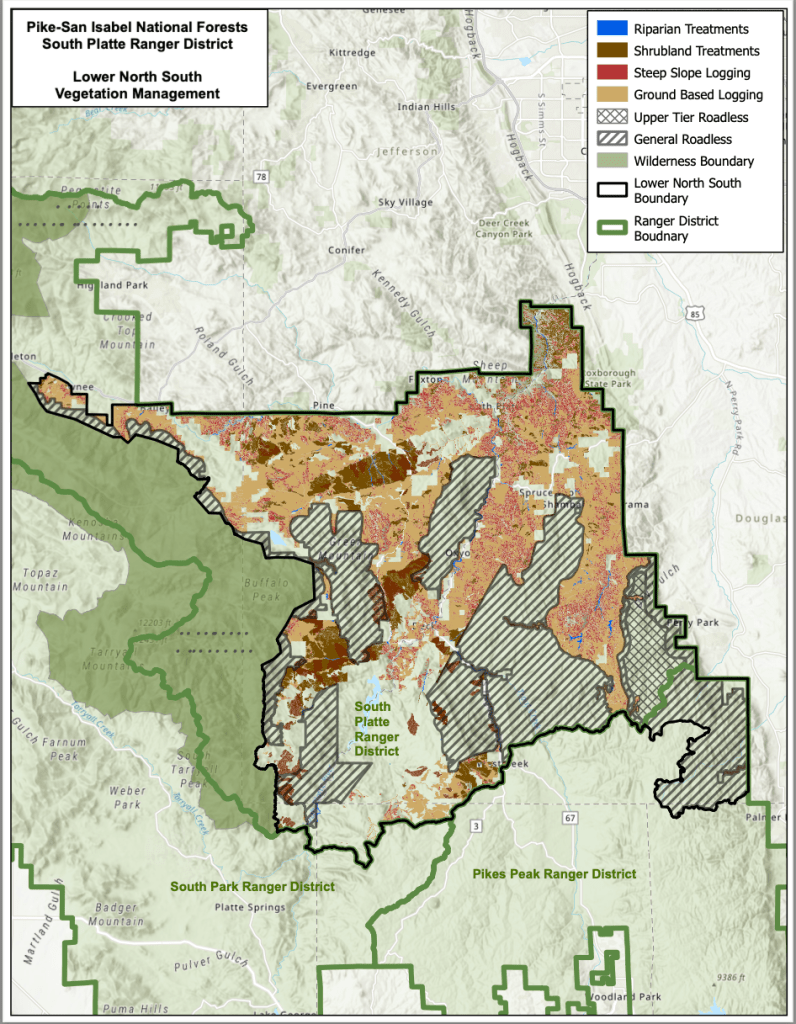
The imminent “Lower North South Vegetation Management” in the Pike National Forest 30 miles southwest of Denver in Jefferson, Douglas, Park, and El Paso Counties involves 116,600 acres of public lands logging, including 18,573 acres across seven Roadless Areas.
The recently begun “Black Diamond” in the Arapaho and Roosevelt National Forests in Larimer County, involves 120,455 acres of public lands logging, including 21,503 acres across four Roadless Areas.
The ongoing “St. Vrain” in the Arapaho and Roosevelt National Forests in Boulder and Larimer Counties, involves 43,250 acres of public lands logging, including 7,863 acres across two Roadless Areas.
Pike’s Peak and Lower North South are being rushed through under a controversial, scientifically-debunked federal “emergency authorization” that has been expanded to 112 million acres—59 percent of National Forests—weeks after Trump’s executive order for expanding timber production on public lands. This logging coincides with the Forest Service’s rollback of the historic “Roadless Rule” across 60 million acres and U.S. Senator Hickenlooper’s introduction of the Orwellian “Fix Our Forests” logging bill into the Senate.
The Forest Service is giving the public less than two weeks to comment on the Pike’s Peak project during the holiday season, expecting as in the past, that zero Colorado media outlets will report on the logging and, therefore, almost no Coloradans will get the chance to engage in participatory democracy on the biggest threat the state has ever seen on public lands.
Contrary to a industry/government disinformation campaign, the agency’s main talking points for such supposed “fuel reduction” logging—“community protection” and “reduction” of high-severity wildfire—are debunked by the consensus body of peer-reviewed science, as well as the Forest Service’s own studies, with the conflict privately admitted to even by Colorado Forest Restoration Institute, which promotes and carries out “fuel reduction” logging. To the contrary, studies show logging more likely to threaten homes and lives by spreading fires to communities after drying out and heating up forests and opening them to wind.
Lower North South
The U.S. Forest Service’s so-called “Lower North South Vegetation Management” in the Pike National Forest 30 miles southwest of Denver is Colorado’s second largest logging scheme of the century and possibly in history.
It involves a mind-boggling 116,000 acres of aggressive logging—47,000 acres of “treatments” in seven supposedly protected Roadless Areas—including clearcuts up to forty acres in size.
It’s part of a fake “emergency” under which the U.S. Department of Agriculture has placed 112 million acres—59% of all National Forests—on the chopping block in the wake of the Trump administration’s executive order for “Immediate Expansion of American Timber Production.”
What’s more, this biodiverse, carbon-storing forest—which includes mature and old-growth stands—is crucial habitat for wildlife listed under the Endangered Species Act, including the Mexican spotted owl, Pawnee montane skipper, Preble’s meadow jumping mouse, and threatened Canada lynx.
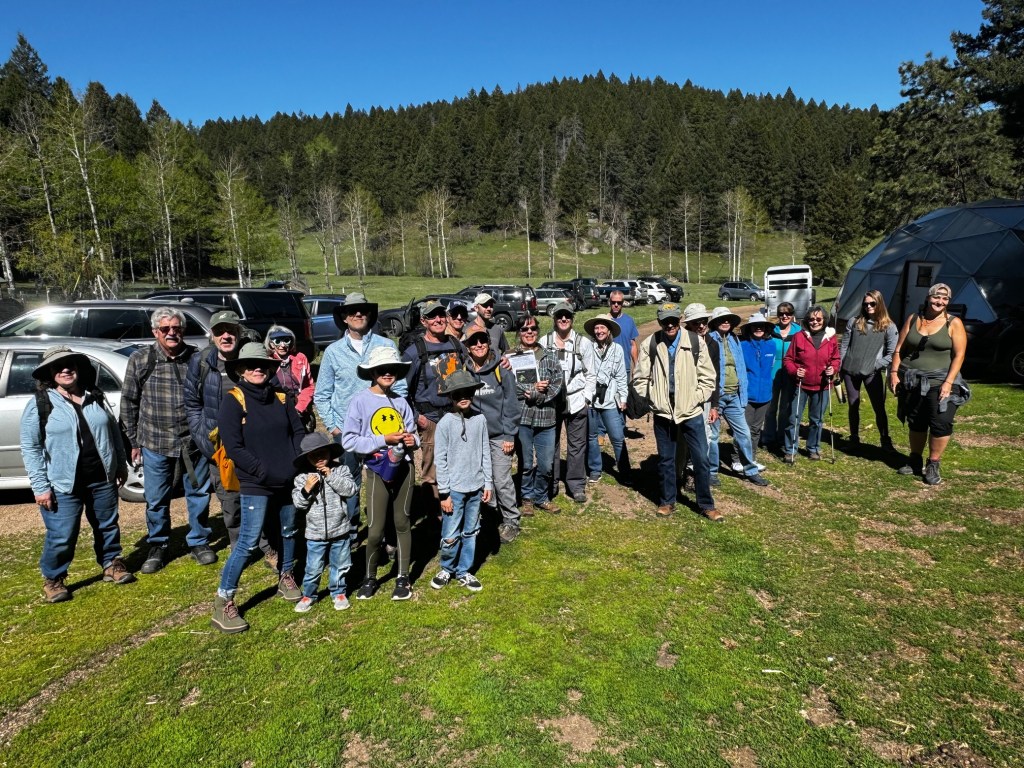
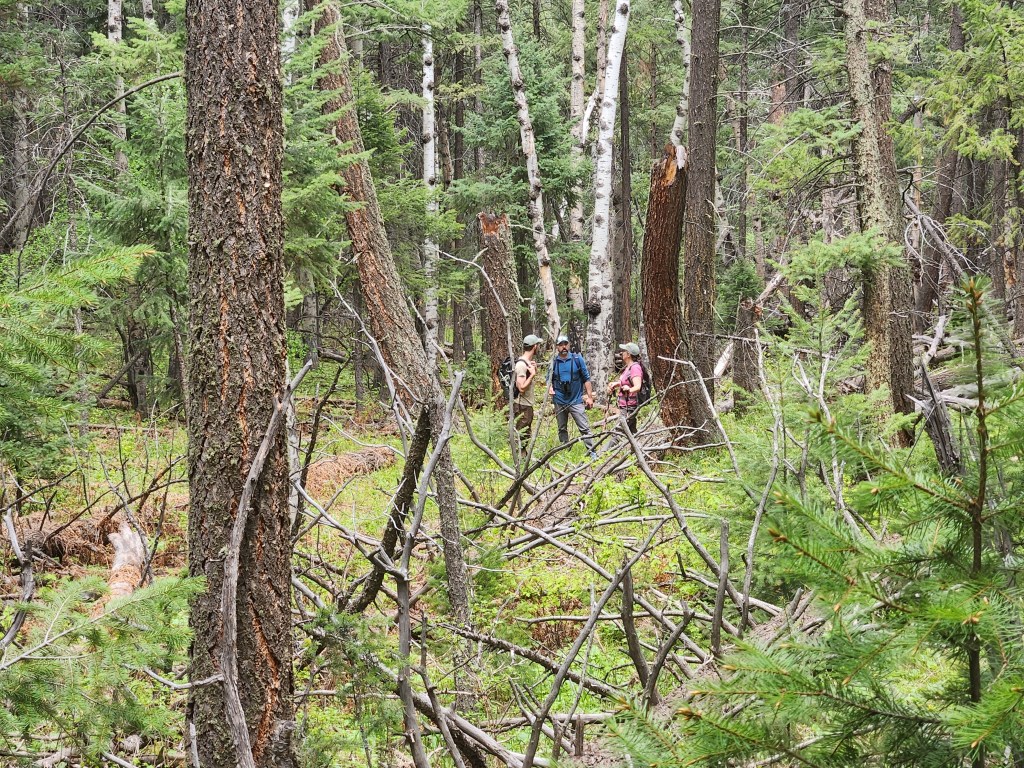
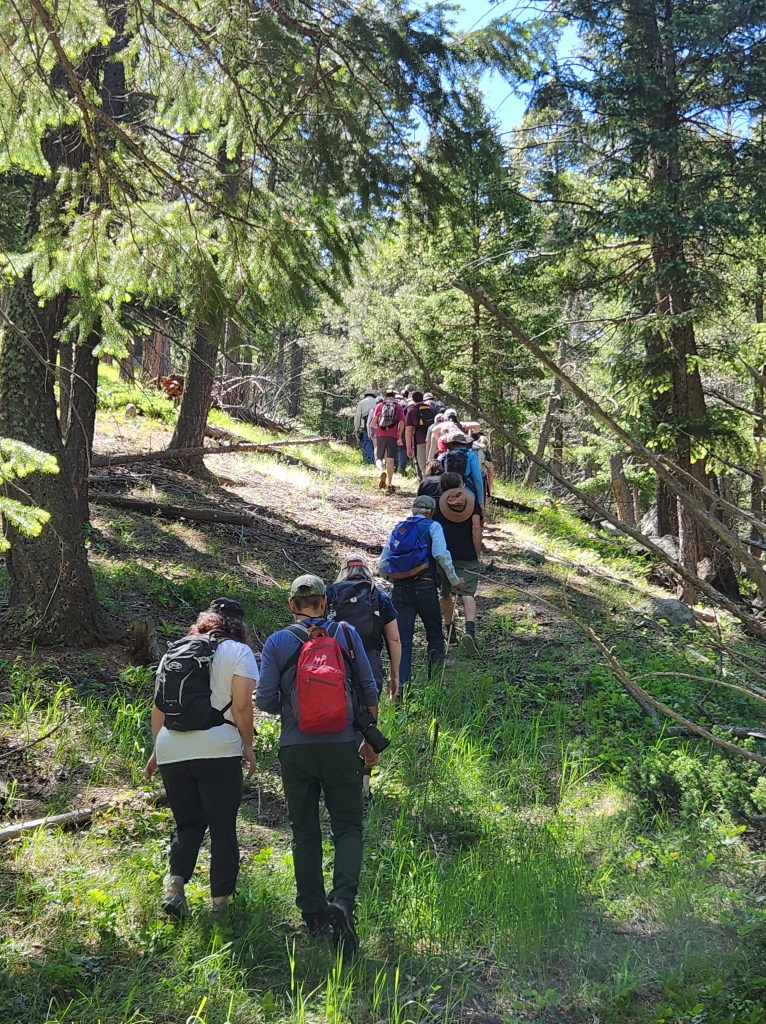
Despite a nearly two-year grassroots campaign involving three hikes with close to 100 people, calls and emails to elected officials such as Rep. Brittany Pettersen (in whose district much of the logging would occur), multiple blog posts, press releases, and more, this project has been extremely difficult to fight due to an intentional Colorado media blackout on even acknowledging the existence of the impending logging.
In fact, not only hasn’t a single Colorado media outlet reported on the impending destruction, several published outright DISINFORMATION falsely claiming Colorado Roadless Areas are “safe from Trump’s axe” as the administration rolls back the “Roadless Rule” across National Forests. To the contrary, Colorado’s Roadless Areas, currently under a separate rule, are still open to aggressive logging, as the proposed Lower North South (and other projects) proves.
Read about the objections to the project by Rocky Smith, forest management analyst of 40+ years, and the Colorado conservation organizations that signed on his comments.
Take Action
Contact Rep. Brittany Pettersen
We’re asking folks to email U.S. Rep. Brittany Pettersen, in whose district the logging is proposed and who is perhaps our best chance in Congress for speaking up on this issue.
Here’s is a link to a “Mad Libs” sample comment on “Lower North South” which you can copy and paste into an email, fill in the blanks (or remove the blanks entirely) and send. Of course, also feel free to add whatever you like or write your own original comment.
Please send to Rep. Pettersen’s Legislative Aide, Delaney Deskin, at the following email delaney.deskin@mail.house.gov and District Director Hannah Mullen at hannah.mullen@mail.house.gov
Contact Media
Please contact local media outlets and ask them to end their blackout of the largest logging project of the century by doing its job informing the public and holding industry and government accountable to preserve what’s left of our participatory democracy.
A quick email—doesn’t need to be fancy—that includes any of the points below will do.
-“Lower North South Vegetation Management” in the Pike National Forest 30 miles southwest of Denver is Colorado’s largest logging project of the century.
-The 116,000 acres of logging would occur in Roadless Areas, endangered species habitat, and old-growth forests.
-You’re upset/confused that media has chosen not to report on this project at all, and you urge them to please immediately inform the public and hold our government accountable.
CBS News: KCNCNews@cbs.com, yourreporter@cbs.com, lfsmith@cbs.com, kmstrain@cbs.com
Colorado Community Media: Info@ColoradoCommunityMedia.com
Colorado Public Radio: news@cpr.org, twendland@cprmail.org
Colorado Newsline: info@coloradonewsline.com
Colorado Sun: tips@coloradosun.com, tracy@coloradosun.com
Denver Post: tips@denverpost.com, newsroom@denverpost.com
KDVR: tips@kdvr.com, problemsolvers@kdvr.com, Jennifer.brockman@kdvr.com,
Westword: patricia.calhoun@westword.com, thomas.mitchell@westword.com,
 The Colorado Smokescreen