

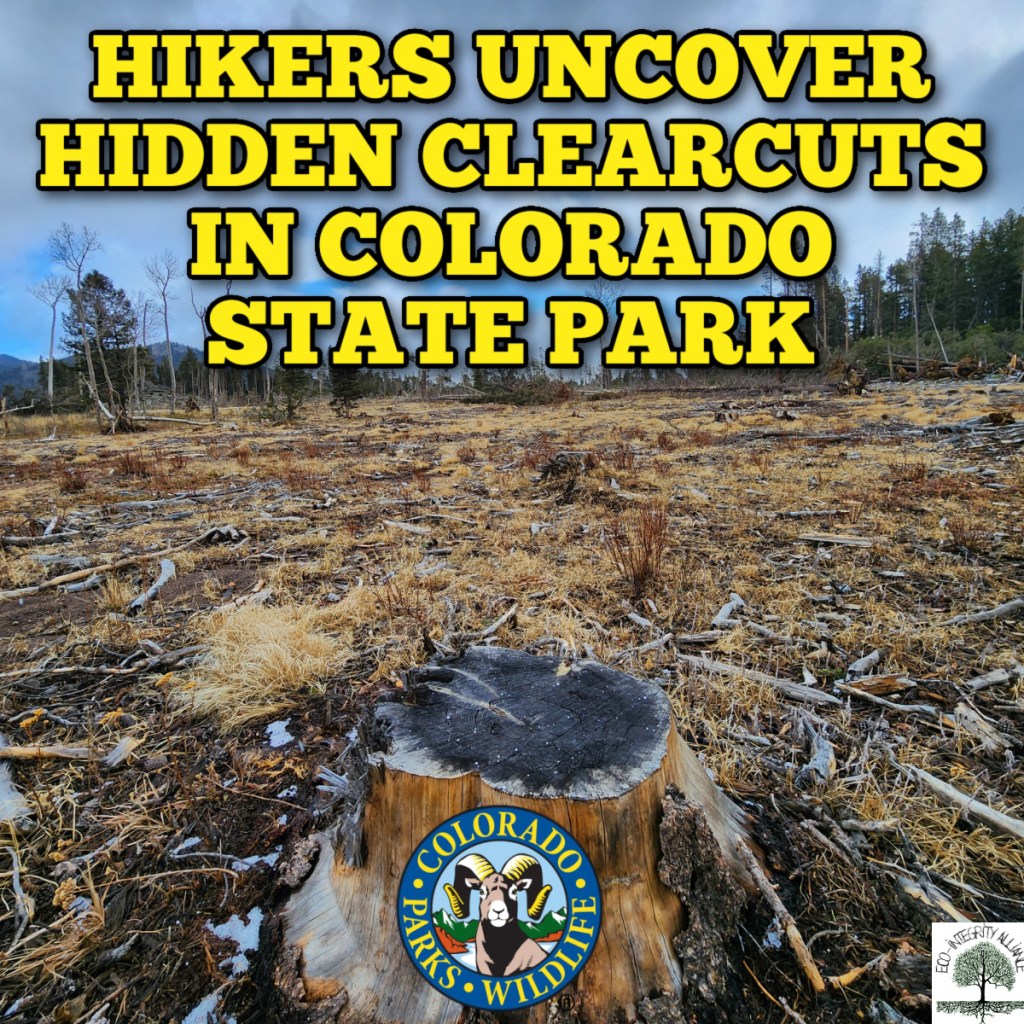
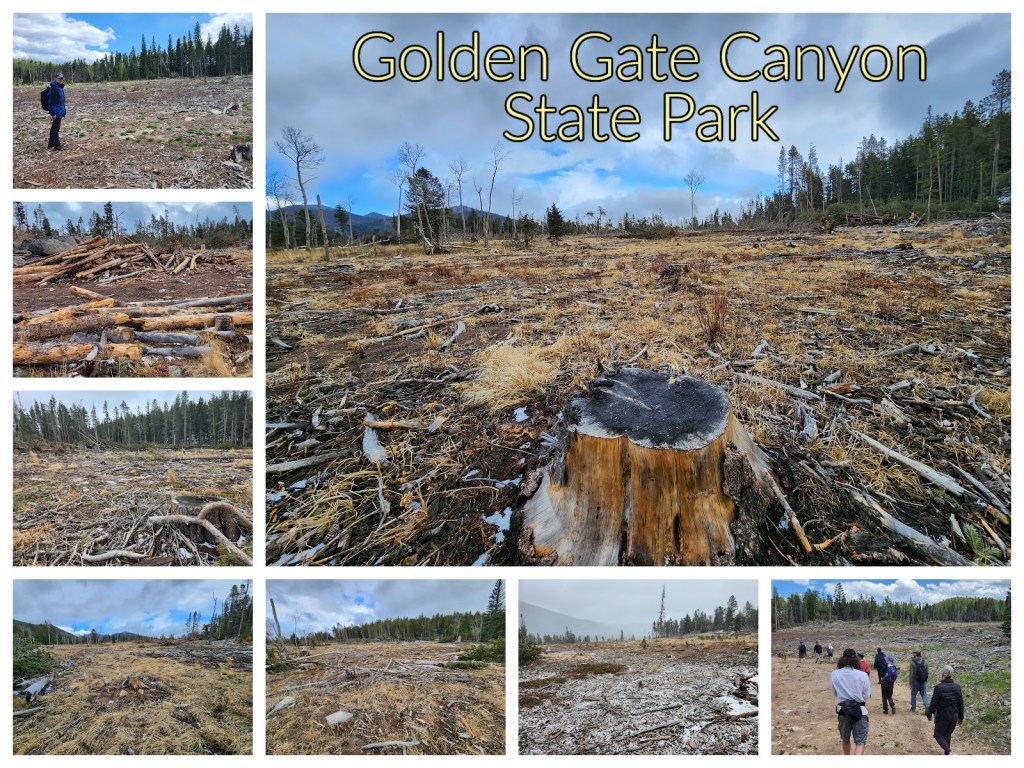
A group hike in May to Golden Gate Canyon State Park uncovered massive clearcuts only accessed by a closed and gated service road in the state-owned 12,000-acre gem northwest of Golden, the third largest state park in Colorado.
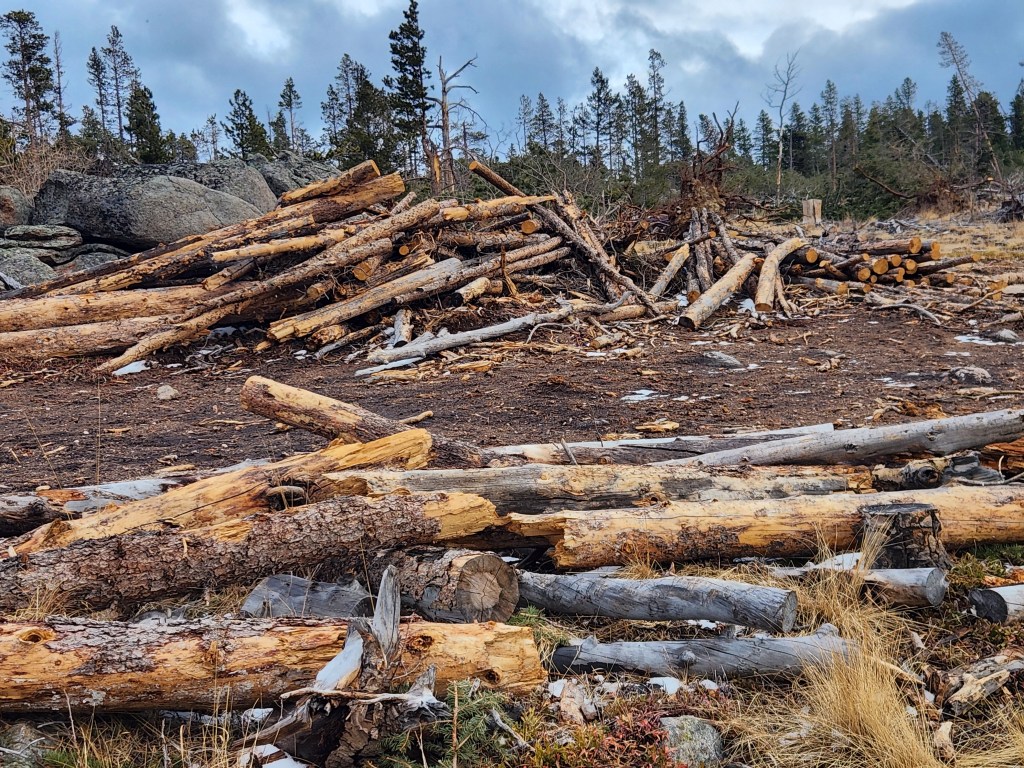
Thirteen years after clearcutting in the name of “wildfire mitigation” by Colorado State Forest Service, managed by Colorado Parks and Wildlife (CPW), and overseen by Governor Jared Polis’ Department of Natural Resources (DNR), the hundreds of acres of bare, woodchip-strewn ground still hadn’t regrown more than a few patches of grass and shrubs.
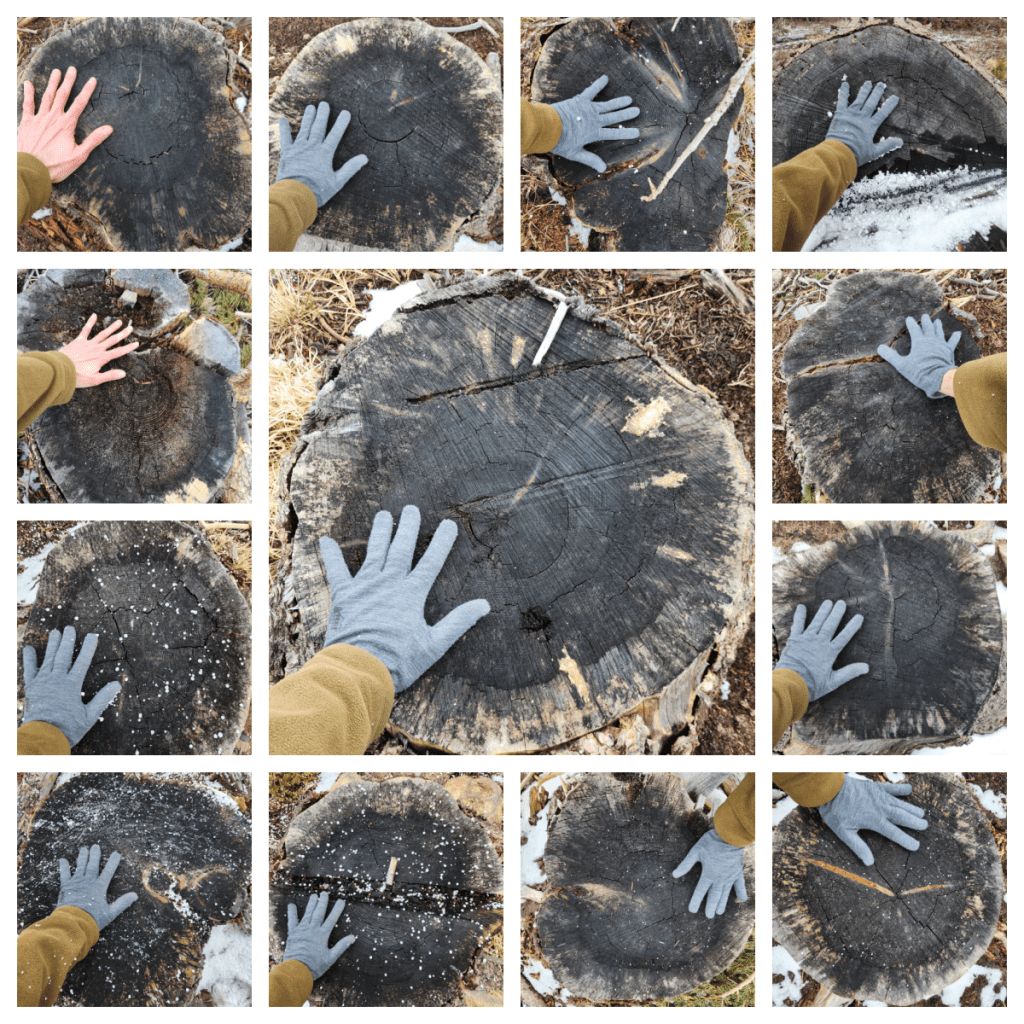
The dozen hikers (CPW required a permit and limit of twelve) counted rings on some of the scores of hundred-plus-year-old stumps.
They felt firsthand the heating and drying effects of sun on bare soil compared to the nearby cooler, moister, unlogged forests and the wind gusting across the open landscape (which is what spreads embers during a wildfire).
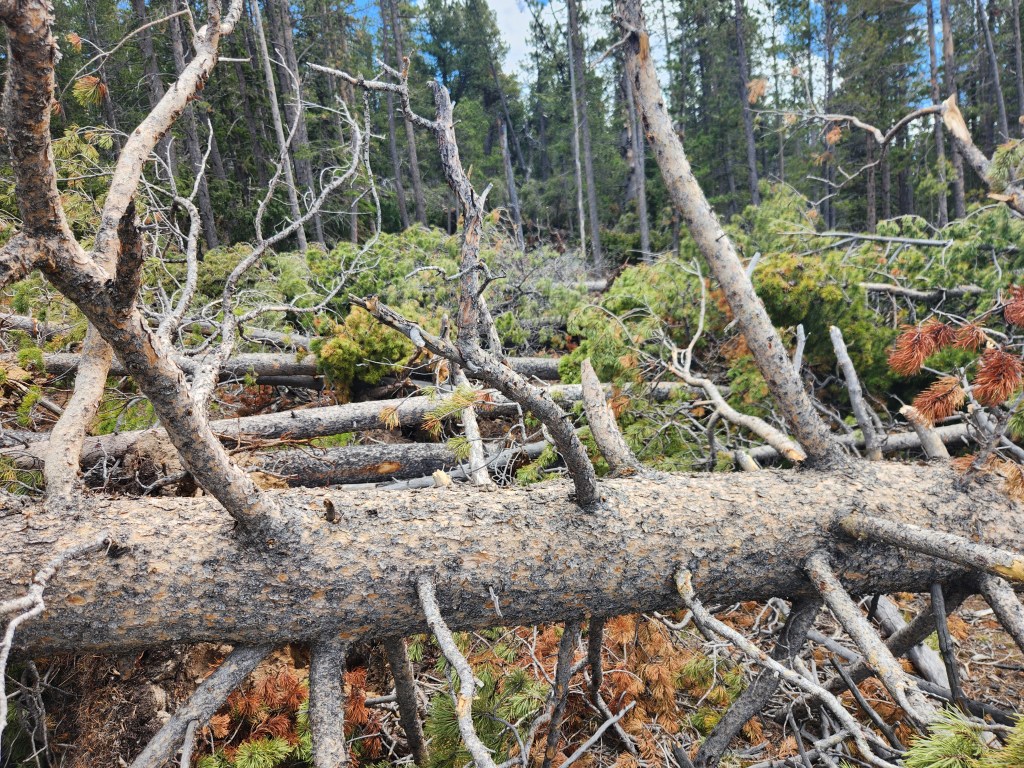
Attendees also documented several dozen wind-downed trees that continue to fall like dominos at the edge of the wide-open clearcuts.
The hike, led by Eco-Integrity Alliance, was the first in a monthly “Good, Bad & Ugly Hike” summer series to investigate Colorado’s “land management” practices on public lands at a time of unprecedented logging in the state. More info at ColoradoSmokescreen.org.
Consensus science concludes that any rationale for “fuel reduction” logging in supposedly “overgrown” forests as a result of fire suppression is completely false in Golden Gate Canyon State Park’s upper montane (7,200-7,800 feet) and subalpine (9,000-11,000) elevations that historically could go a century or longer between mixed-severity wildfires.
The vast majority of peer-reviewed science reveals such tree cutting to be typically ineffective or even counterproductive at preventing the spread of fire to communities or reducing weather- and wind-driven high-severity wildfire (a natural phenomenon in nearly all Colorado forest types).
UPDATE: Here’s the explanation Colorado Parks and Wildlife gave as to why this thirteen year old clearcut still hasn’t regenerated.
“The project you’re referencing is on the old Mule Deer trail, now an internal service road for the park. This 43-acre area was originally thinned in 2013 to address dead and dying trees that were impacting the trail (at that time) and service road.
“This area is a predominantly lodgepole pine forest. Thinning lodgepole pine is not always the preferred approach for several reasons. Lodgepole cones are serotinous, meaning they remain closed until sufficient heat releases their seeds. Absent heat from a fire, the best way to encourage new growth is to open up enough of the canopy so the sun provides significant heat to the ground, which encourages the cones to open and release their seed. Lodgepole are also shallow-rooted and subject to windthrow. In the case of this 2013 project, that year ended up being extremely wet in the fall (flooding occurred in many areas outside of Boulder). This, coupled with strong winds, felled many trees in this area. Additional wind events in subsequent years continued to exacerbate the issue. In 2022-2023, CPW partnered with the Colorado State Forest Service on a project to address this issue and help the forest regenerate by removing downed trees and any remaining standing trees in this area.”
As of 2022 (the most recent data available), Golden Gate Canyon State Park has carried out taxpayer funded “wildfire mitigation” over 1,250 acres at the cost of $3.5 million in taxpayer dollars.
Between 2022-2025 the Colorado Strategic Wildfire Action Program (COSWAP), housed under DNR, spent $22 million in taxpayer dollars to carry out industrial logging and tree removal on state, county, and municipal mountain parks in the name of “fuel reduction.” COSWAP frequently funds low-cost prison and teen labor to carry out some of the most dangerous work in the nation, according to OSHA.
In March, a bill was introduced into the Colorado state legislature that would’ve shared a percentage from the Wildfire Mitigation Capacity Development Fund (one of several COSWAP programs) to fund grants for proven-to-be-effective home hardening for low-income, elderly, and disabled Coloradans. DNR, County Commissioners, and “working lands” NGOs teamed up with the logging industry to prevent the bill from getting out of committee.
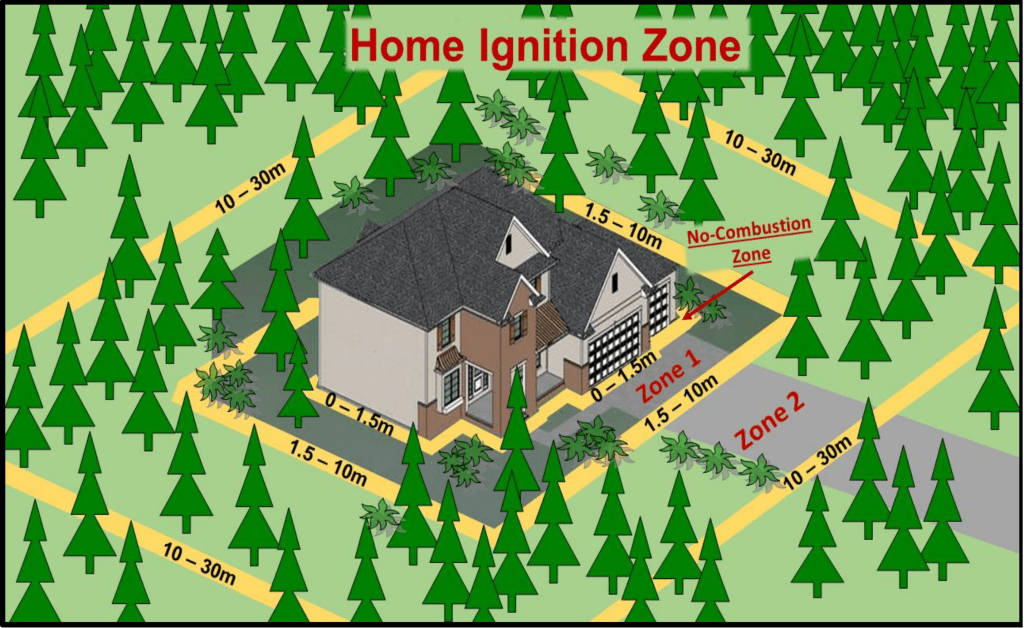
A ballot initiative sponsored and supported by “working lands” NGOs—The Nature Conservancy (which logs public lands at taxpayer expense and has a $1.8 billion budget), Western Resource Advocates, and Conservation Colorado, each of which testified against the home hardening bill—seeks to expand logging under the cover of recreation, while using the fabricated claim that it would somehow “prevent wildfires” (not even agencies carrying out “fuel reduction” make claims of fire prevention.)
DNR’s and Gov. Polis’ “Ponderosa Mountain Pine Beetle Task Force”—created in December in reaction to the latest natural wave of native mountain pine beetles in Front Range forests, of which consensus science debunks any link to increased fire risk—consists almost entirely of representatives from entities that depend on tax dollars to carry out logging on Colorado public lands. Efforts by conservationists to encourage Polis or DNR to appoint independent scientists and/or members of the conservation community to the Task Force have been rejected.


Leave a Reply