

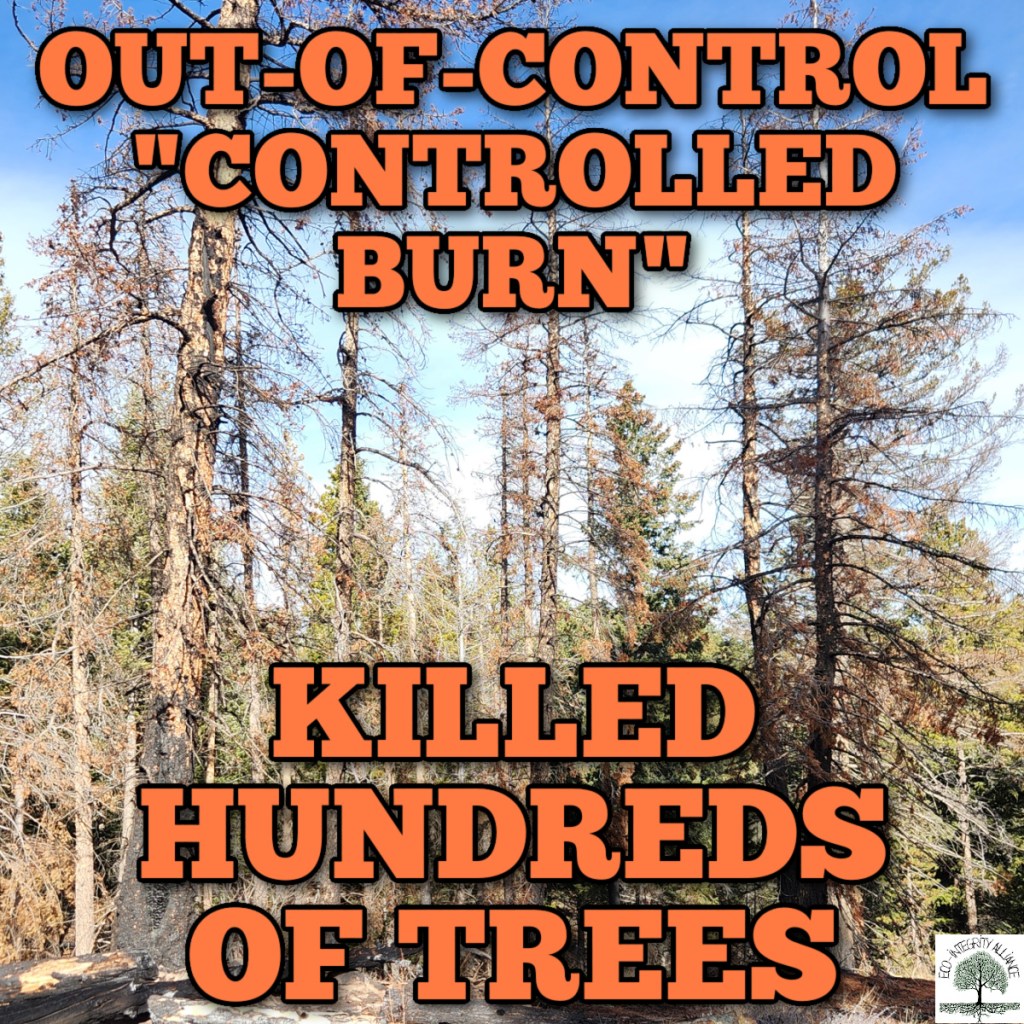
A post-logging “prescribed burn” overseen by the Boulder Ranger District of the Arapaho-Roosevelt National Forest in May 2025 near Gross Reservoir between Boulder and Nederland got out of control (reportedly due to higher-than-expected winds), accidentally killing and damaging hundreds of trees up to an estimated 200 years old.
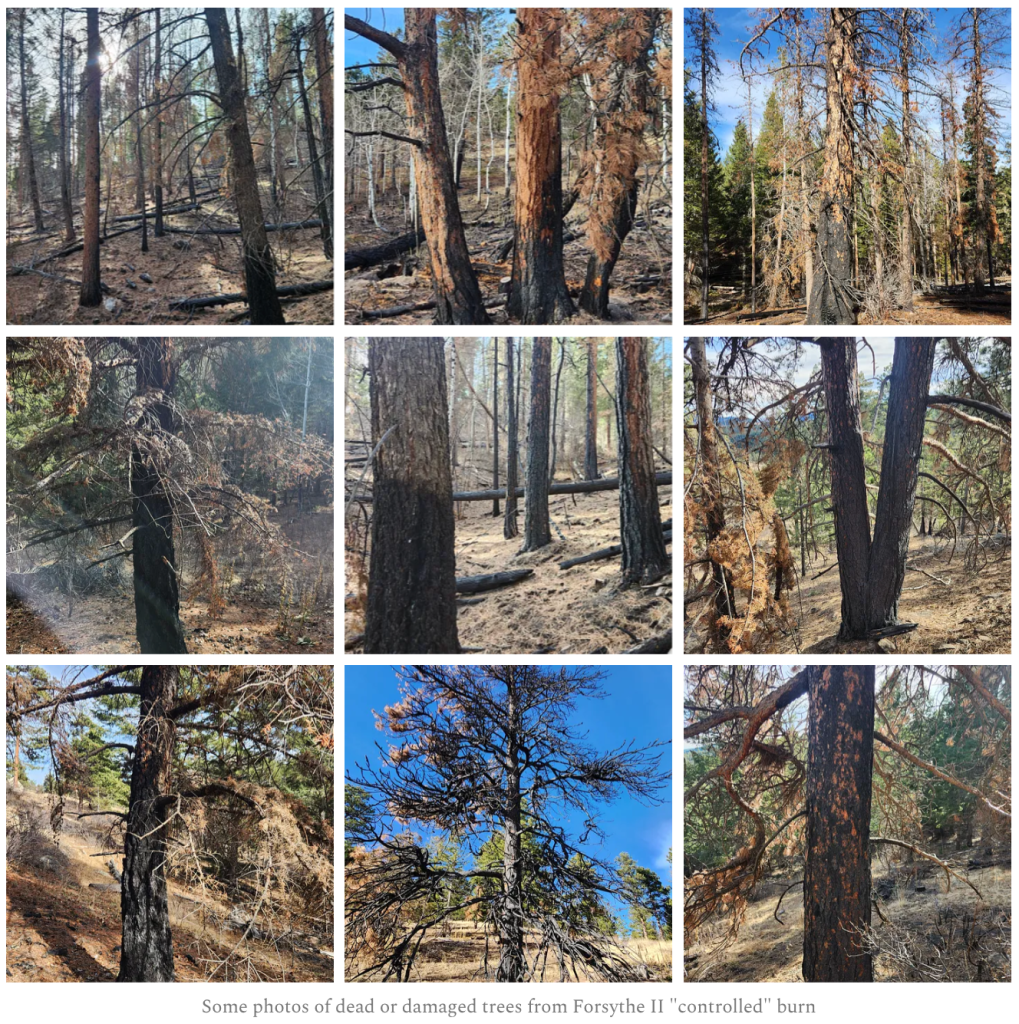
Over sixty photos recently taken within the 131-acre Unit 45 of the U.S. Forest Service’s Forsythe II logging project show many large, medium-sized, and small trees killed by the pile and broadcast burn last spring, their trunks scorched, vegetation dead or completely consumed. Flammable woody debris lies scattered throughout much of the unit from agency operations.
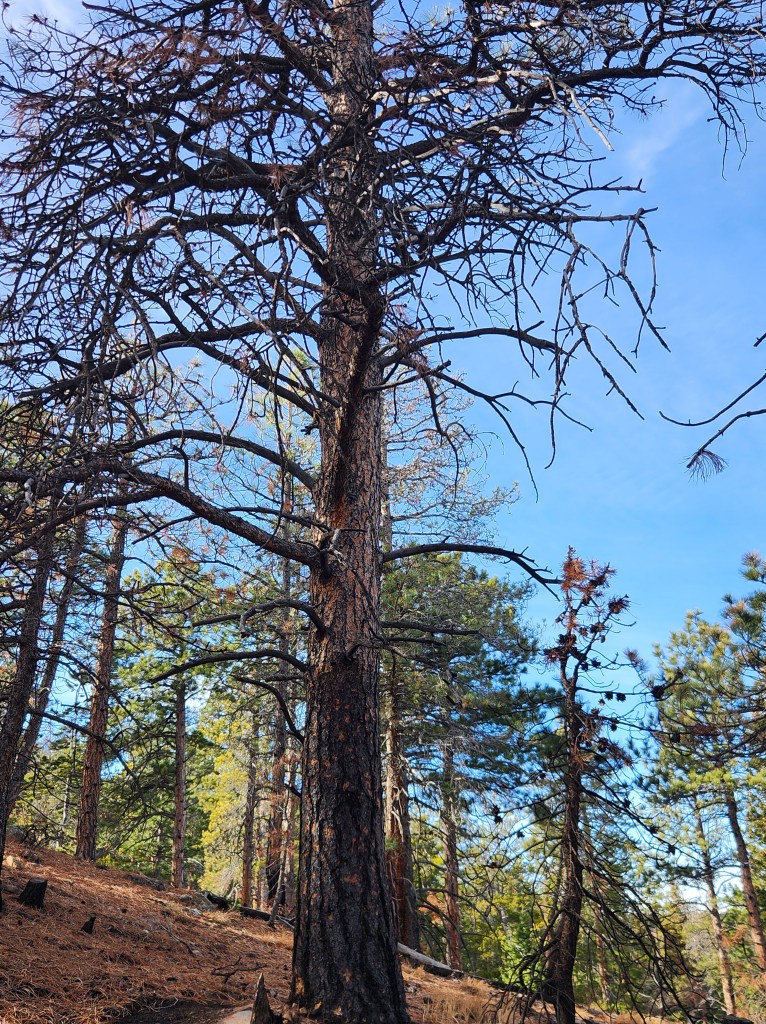
The federal project was undertaken under the auspices of reducing “hazardous fuels on National Forest lands that may contribute to the increased spread and intensity of wildfires,” despite Forest Service data proving that this mixed-conifer and lodgepole pine forest in the upper montane zone is well within its historic fire return interval of hundreds of years. This means forest density has not been altered by about eighty years of fire suppression (only truly effective once aircraft was employed after World War II) and categorizations of these forests as “overgrown” are false.
In 2022, a Forest Service prescribed burn in New Mexico turned into the state’s largest and most destructive wildfire in recorded history, destroying nearly one thousand structures and at least 160 homes, while burning more than 341,000 acres.
In 2019, The Nature Conservancy set a fire that also got of hand, which “took dozens of firefighters and three days to put out.”
In 2012, a Forest Service prescribed burn got out of control in Jefferson County, Colorado, killing three people, damaging dozens of homes, and burning thousands of acres.
Forsythe II Unit 45 can only be accessed by walking two miles along a logging road off another closed and gated road on the way to Gross Reservoir. Forsythe II, approved in 2017, has since logged—including clearcut—several hundred acres and will soon finish burning several hundred more of high-elevation lodgepole pine and mixed-conifer forest without sound scientific justification.
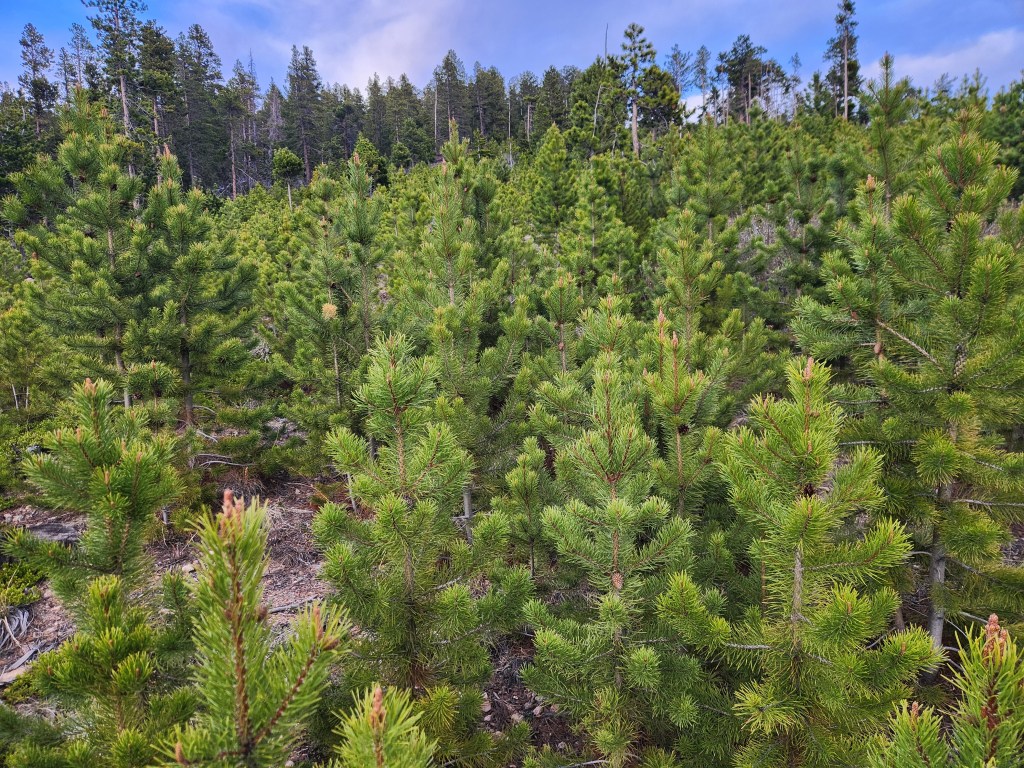
The Forest Service initiated Forsythe I in 2012, which included over 5,000 acres of logging and burning. Since then, most of the clearcut areas—primarily lodgepole pine stands—have grown back even more densely than before (see photo).
The Forest Service’s defense of this high-elevation logging and burning—community protection and reducing high-severity wildfire—has been challenged by the vast majority of peer-reviewed scientific studies, including those conducted and/or funded by the agency itself.
Instead, consensus science concludes that while some thinning may sometimes reduce the burn severity of lower-intensity fires (those already easily contained by firefighters), removing trees from a forest rarely slows the spread of wildfire to communities nor reduces high-severity fire (a product of high temperatures, lack of moisture, and strong winds). To the contrary, such “thinning” has been shown to increase the risk of spreading flames to communities by drying out and heating up the forest microclimate and opening it to winds.
While prescribed burning (without tree removal) in some lower montane ponderosa pine forests can be argued as a way to mimic wildfire, there is little credible evidence behind industry and government claims that increased forest density is a main factor behind high-severity wildfire (some studies show the opposite to be true), nor that “thinning” reduces high-severity burning.
What’s more, while land management agencies such as the Forest Service and County Open Space departments nearly always couple “thinning” (logging) with prescribed fire, many studies show tree removal to be unnecessary for returning fire to the landscape.
Almost no media outlets in Colorado have covered the ecological impacts of Forsythe I or II and few have reported on any criticism of “fuel reduction” from the scientific and/or conservation community, nor appear to have done any fact-checking of debunked agency claims promoting the efficacy of logging in the name of community protection from wildfire.
Meanwhile, the Forest Service has proposed the largest logging projects in state history (half a million acres of logging across the Front Range, including in endangered species habitat, old-growth, and Roadless Areas); placed 112 million acres under an “emergency” designation that allows the agency to rush through logging while bypassing environmental laws; and rolled back the historic Roadless Rule protecting 60 million acres of remote backcountry, all in the name of “wildfire.”
 The Colorado Smokescreen
Leave a comment