

Letter to the editor, The Mountain-Ear, August 22, 2025
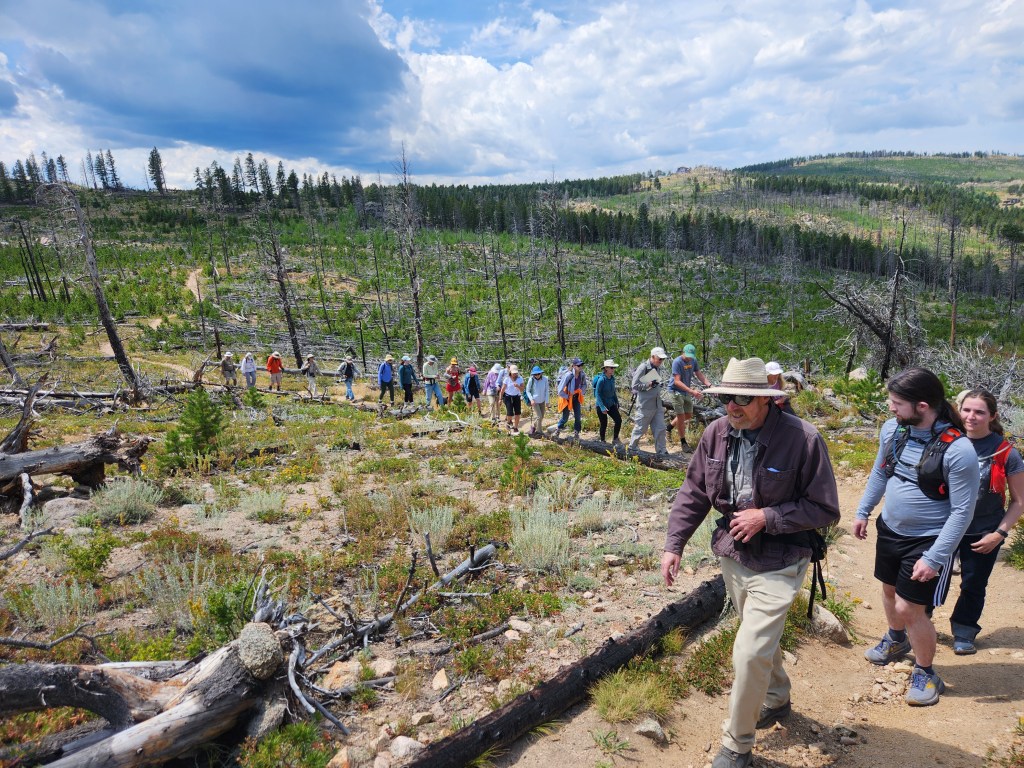
Thank you for covering the Cold Springs burn tour (The Mountain-Ear 8/14/25). I have been involved with forest management issues in Boulder County since the early 1980s and have found it to be a very important but difficult matter to know if we are doing more harm than good and if the large amounts of public money are being spent on the right thing.
The vast majority of acres that burn each year in the US does so under extreme meteorological conditions – high winds and low humidity. Under these conditions wildfire mitigation efforts focused on surrounding forests are often useless.
Higher elevation forests are generally not out of the range of variability. They can have long cycles between fires. They are what they should be and don’t need restoration. As they evolve into uneven-aged forests they become very good wildlife habitat. One person’s “ladder fuels” is another animal’s “structural diversity.”
Animal species diversity is higher in an uneven-aged forest than an even-aged thinned pole-stage forest, particularly for lodgepole pine. Important habitat components, such as standing dead trees, large deadfall, seedlings and shrubs, are mostly removed making the habitat impoverished. The treatments have to be repeated periodically meaning the forest never hits a mature stage.
The best expenditure of money would be on home hardening and mitigation around the house, as well as escape routes. Trying to manage the forests of the surrounding landscape has too high a probability of being unsuccessful during the worst conditions (when most of the land burns), and generally results in diminished quality of habitat.
Dave Hallock
Eldora
 The Colorado Smokescreen
Leave a comment