

Originally published in Summit Daily, July 9, 2025
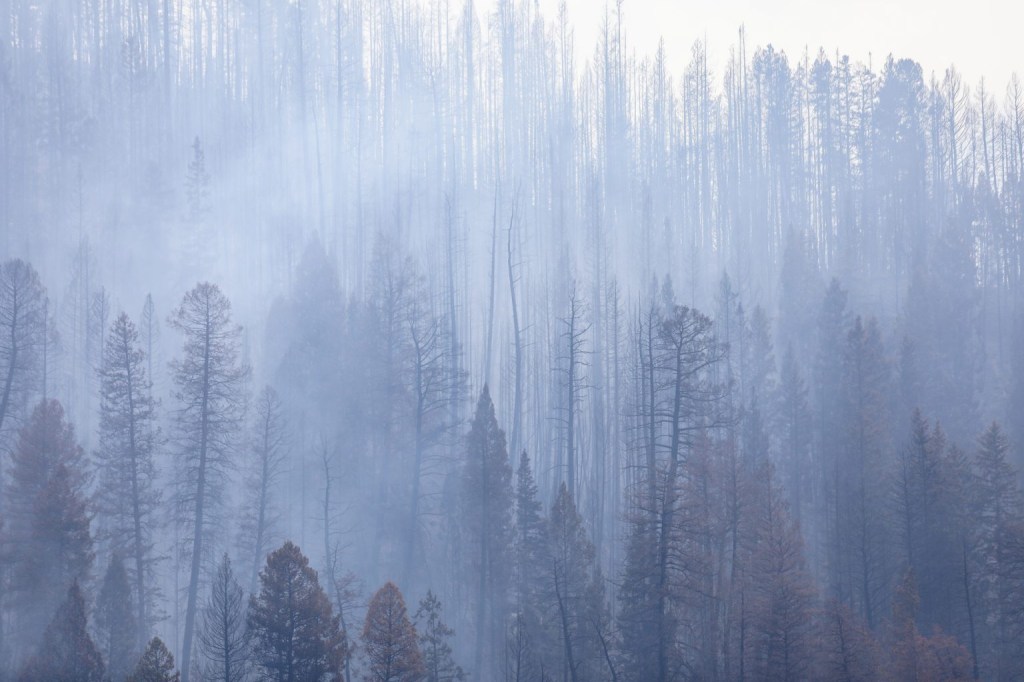
Ecological study recognizes a wide range of ecosystems with biological interactions often varying greatly among different ecosystems. The role of fire particularly differs dramatically from one ecosystem type to another.
Fire isn’t a big part of nature here
I extracted a table of information from U.S. Forest Service databases for Summit County. In the twenty years from 2005 to 2024, there have been 21 wildfires one-quarter acre or larger in the county. Most informative — and policy suggestive — may be three things noticeably absent from the table: lightning, lost structures and climax forest. First off, only one of the fires was started by lightning. This suggests pretty clearly that fire is not naturally part of the mostly spruce/fir (Engelmann spruce- and subalpine fir-dominated) ecosystems of high-elevation Summit County. You’ve likely heard that fire suppression has allowed fuel volumes to build up to dangerous levels, but that is not the case here in our slow-growing Alpine ecosystems.
Can we live without campfires?
Digging a little deeper into the “cause” column, many are labelled “undetermined” human-caused, because specific causes are only named when they can be with substantial certainty. But the expectation is that many, if not most, of these fires started from campfires. Sitting around a roaring campfire is certainly part of the mystique of the mountains and the “Old West,” but times change. If virtually all of our wildfire danger comes from campfires, maybe we can learn to live without them. They are already restricted in designated wilderness areas and banned generally at times of high fire danger without too terrible an outcry, so is it time to ban them altogether?
Can we fight unfair insurance rates?
We had to add the “structures burned” column to the table, because the data system didn’t find it necessary. No homes or other structures were burned by wildfire in Summit County in the last 20 years, and no one remembers any before that. Retired U.S. Forest Service employees referred to Summit County as the “asbestos county.” Thanks are due to the Forest Service and our local fire departments, but also especially to our high altitude. So if wildfires have burned no homes here, why are we getting burned by the insurance industry?
Getting lumped together with more wildfire-impacted areas probably has a lot to do with our skyrocketing home insurance rates and condo buildings being refused insurance despite non-existent wildfire losses. But the Colorado Division of Insurance says that insurance companies can set rates any way they choose, that there are no standard regions for setting rates, and that there is no way to file a regional complaint. Complaints can only be filed for individual policies. Maybe if we all filed (perhaps with copies to Rep. McCluskie, Sen. Roberts and Gov. Polis) with the simple complaint that we live in a county where no homes have ever been burned by wildfire, someone might get the idea that we deserve help?
Can we revere, protect and encourage old growth forests?
If Summit County is predominantly spruce/fir climax ecosystems, how is it that spruce/fir (one of the data system’s categories) is totally absent from the fuel column of our fire history table? “Mixed Conifer,” appearing three times, indicates presence of spruce and fir, but also similar portions of lodgepole pine. Is spruce/fir climax naturally resistant to major fires? Given that it takes 150-200 years for a forest stand to regain climax composition after disturbance, any spruce/fir climax stands must have withstood fire for at least that long. Disturbances here are not likely to be from fire; if you’re seeing lodgepole pines, it’s likely because spruce and fir were logged during the Depression to make whatever bucks could be made.
The fuel column also lists grass and sage for half the fires, and the discovery date column places nearly all from June to September, when grass and brush are likely to be dried out. Tragically witnessed by the Marshall and other recent major fires, grass fires can spread to 3,000 acres in an hour, compared to 15 for dense conifer forest. So maybe trees generally are not the threat. You’ve likely been told that beetle-killed lodgepole pines are a fire hazard. But, the risk is actually significantly less than when the trees were alive. Think about it. Once the needles drop, there is far less there to burn. And, if you ever walk through a burned forest stand, you’ll notice that the tree trunks are largely still standing. The needles are gone, as is the litter on the ground, but the actual tree trunks contributed little to the fire. So can we think of beetle-impacted lodgepole stands as future fire-resistant spruce-fir stands and cherish them as well?
 The Colorado Smokescreen
Leave a comment