

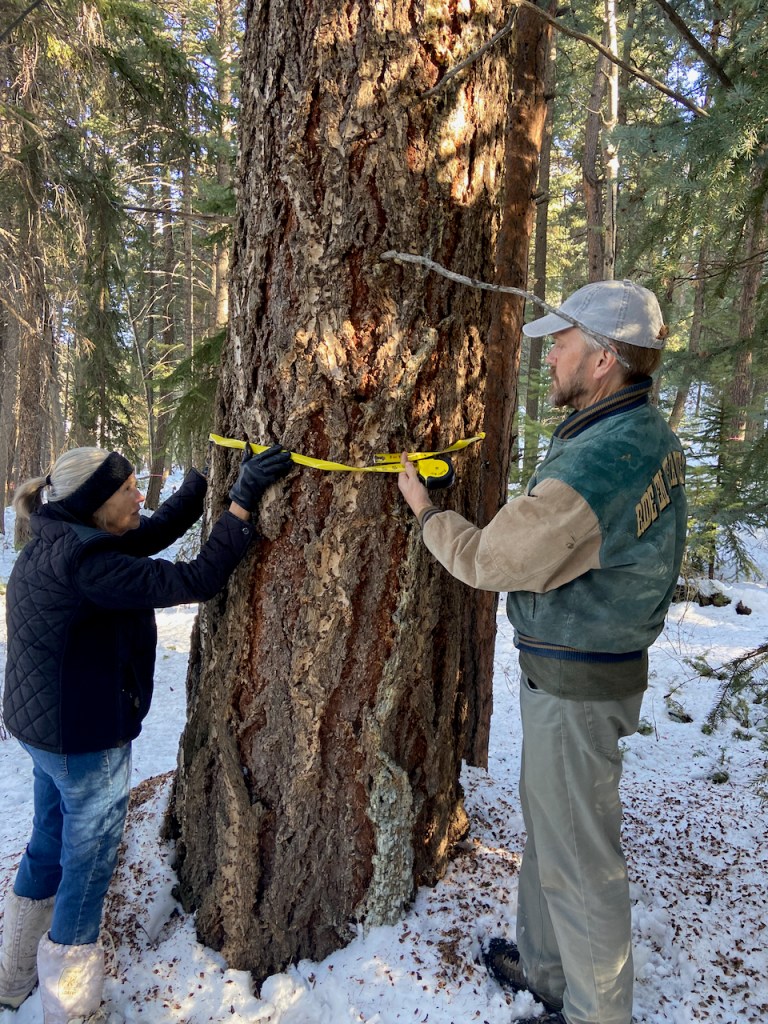
Jefferson and Denver County residents and other Coloradans are asking Denver Mountain Parks to axe its plans to remove the majority of trees–including mature trees over 30” in diameter–from the iconic Stanley Park in Evergreen by helicopter.
An online petition started by Friends of Stanley Park 80—residents who live near the 80-acre public forest—calls for a temporary moratorium on any more tree cutting across Denver Mountain Parks’ 14,000 acres until the full body of science and public input is considered. Thus far it has 181 signatures and over 100 comments in support of the moratorium, and will be delivered to Denver Mayor and City Council.
The 1912 acquisition of the Denver Mountain Parks (DMP) was in part for “the preservation of native forests,” according to the Denver Mountain Parks Foundation website. Seventy-eight percent of Denver residents consider Denver Mountain Parks “important to their quality of life” and sixty-eight percent of Denver residents visit these parks once a year.
Yet over recent years—without any wider public notice or option for meaningful engagement—several Denver Mountain Parks have been intensively managed through wide-scale forest clearing, including clearcutting and mature tree removal, in the name of “fuel reduction,” “forest health,” and other logging industry euphemisms challenged by peer-reviewed science.
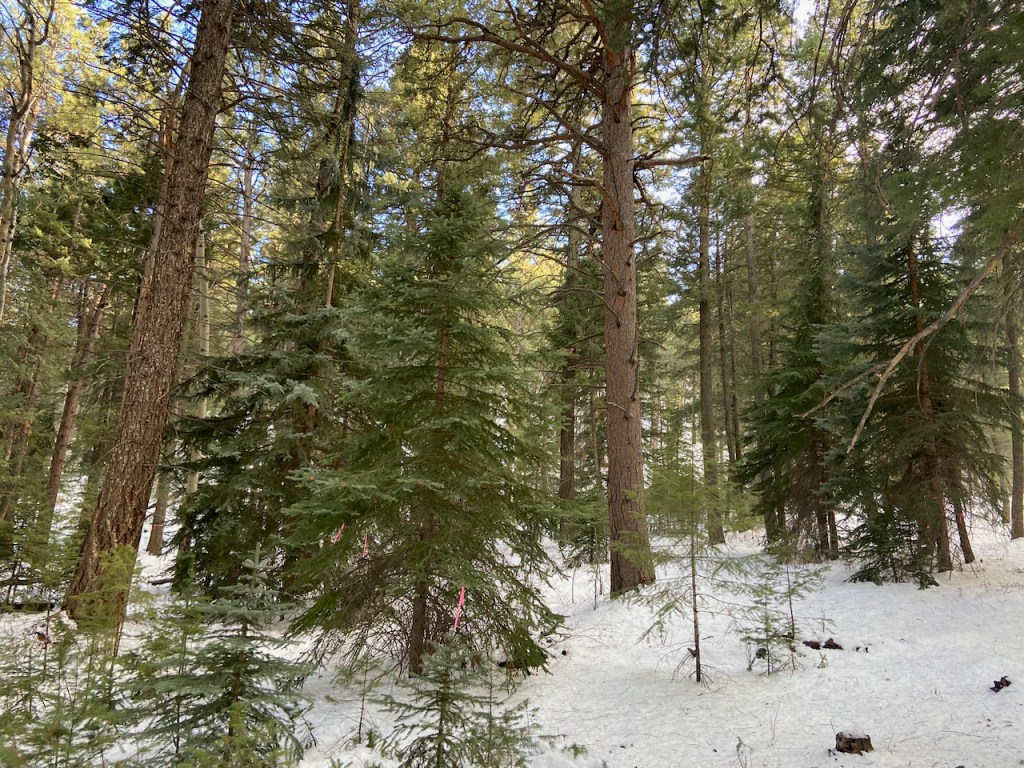
Studies (both independent, peer reviewed and from U.S. Forest Service) show that “thinning” heats up and dries out the forest microclimate, which can make fires start easier and burn more intensely—including igniting crown fires—while opening stands that let winds spread flames quicker to nearby communities, potentially overwhelming firefighters and evacuees.
Denver Mountain Parks has yet to incorporate any of this peer-reviewed science into its decision-making process.
“The idea of cutting down trees to prevent fire spread can be likened to removing a healthy lung to reduce the chance of lung cancer,” says Judy McCaffrey with Friends of the Stanley Park 80, who lives adjacent to the park.
Other Denver Mountain Parks recently cut include Dedisse, Bell, and Fillius Parks, all located in Evergreen in Jefferson County.
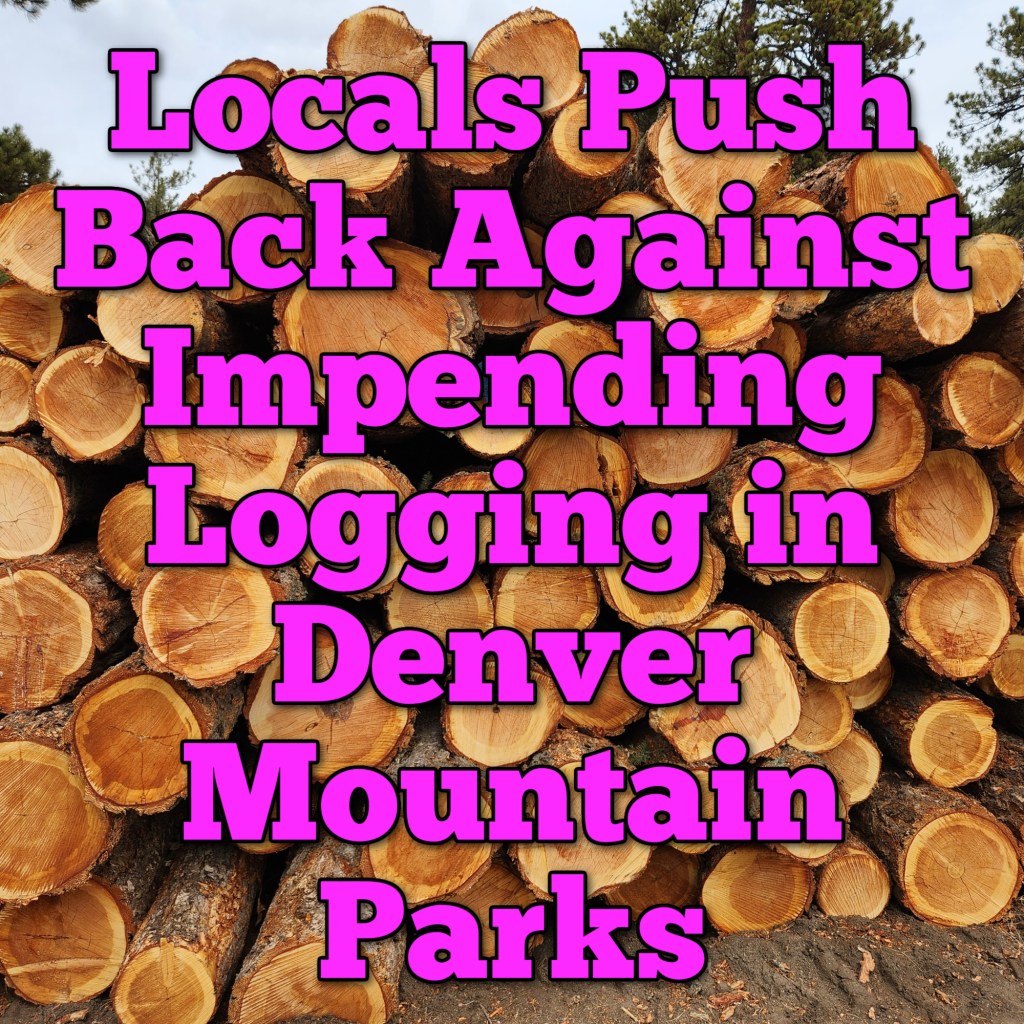
Jean Shindel, who lives one block from Fillius Park and has difficulty accessing trails further away due to age-related concerns, says she was promised by DMP foresters before the 2023 cutting that they’d only remove “smaller diameter” trees. Yet this didn’t turn out to be the case (see main graphic).
“They brought in a commercial logger with a Ponsse Harvester and removed a huge amount of trees and almost all of the healthy mature Douglas Fir and Ponderosa Pine,” says Shindel. “They didn’t ‘thin,’ they clearcut areas in the park. I found numerous stumps twenty and twenty-four inches wide. I felt like crying—they have destroyed the one place where I could find peace and beauty.”
The logging was funded through a $1 million grant from Colorado Strategic Wildfire Action Program’s (COSWAP) Landscape Resilience Investment grant program, administered by the Colorado Department of Natural Resources (DNR), with Jefferson Conservation District as the fiscal sponsor.
While tens of billions of taxpayer dollars are spent on this controversial and scientifically-contested forest clearing in the name of “community protection”—including plans for cutting 3.5 million acres in the Front Range and tens of millions of acres across the West—only a tiny fraction of funding has gone to home hardening and defensible space pruning up to 100 feet around structures, the only measures proven to protect communities from wildfire.
 The Colorado Smokescreen
Leave a comment