

Fast moving fires are the most deadly, according to a new study out of University of Colorado Boulder, published in the journal Science.
These findings dovetail with other peer reviewed studies showing how “wildfire fuel reduction” logging opens forests to wind which can spread flames more rapidly to communities.
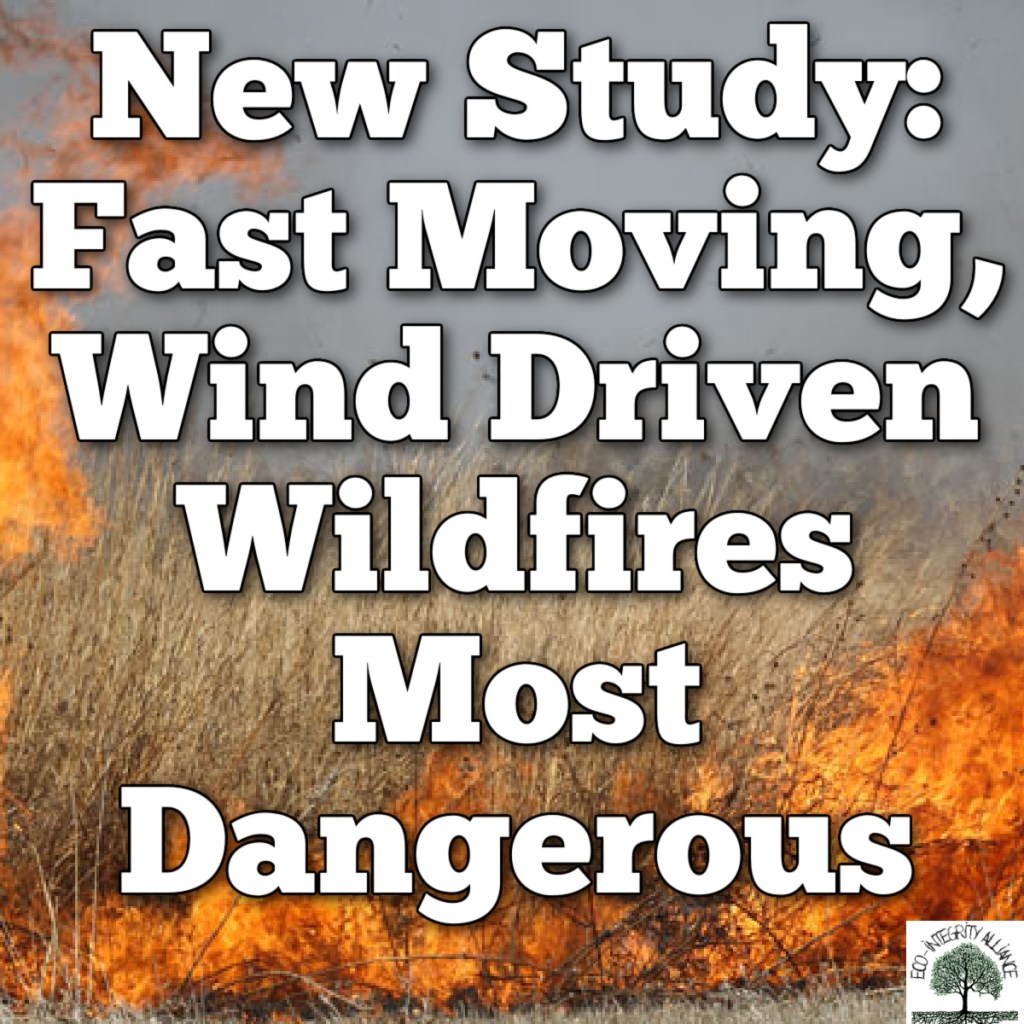
The study, “The fastest-growing and most destructive fires in the US (2001 to 2020),” by Jennifer K. Balch et al., analyzes 60,000 fires across forests and grasslands. It concludes that the ten most rapid wildfires occurred in grasslands, not forests, which “highlights the role of fine, flashy fuels and low wind friction,” not trees.
The fast-moving Camp Fire in Northern California in 2018, which burned intensely through forests previously “thinned” in the name of “wildfire fuel reduction,” received a special mention. The study blames firebrands blown ahead of the fire for igniting structures which “overwhelmed” firefighters, killed 85 people, and destroyed more than 16,000 homes.
Of additional hazard to the public, according to the study, are invasive grasses, which colonize forests after tree removal, and can “drive increases in size, occurrence, and frequency” of wildfires.
More excerpts from peer-reviewed studies finding that “wildfire fuel reduction” can open forests to wind, while heating up and drying out the forest microclimate, can be found here.
Despite this peer reviewed science, Colorado’s Jefferson County and Boulder County Open Space believe it is “feasible” to conduct “fuel reduction” across a total of 80,000 acres at taxpayer expense.
The US Forest Service intends to undertake “wildfire fuel reduction” logging in up to 45 million acres across the West, 3.5 million acres in Colorado’s Front Range alone. The 116,000 acre “Lower North-South Vegetation Management” project—the largest logging project in Colorado history—is being rushed through in the Pike-San Isabel National Forest, including 87,000 acres within protected Colorado Roadless Areas, under a federal “emergency action” authority, with no media coverage.
While tens of billions of taxpayer dollars are spent on this controversial, likely counterproductive, and potentially disastrous logging in the name of “community protection,” only a tiny fraction of funding has gone to home hardening and defensible space 15-60 feet around structures, the only measures—along with patrolling and enforcement of human-caused ignitions—proven to protect communities from wildfire.
 The Colorado Smokescreen
Leave a comment